
ArticleVolume 1 · Issue 2
Theology of Worship in Hebrews
The Theological Ideas of Worship as Presented by the Author of the Book of Hebrews

Introduction
The Book of Hebrews was written to Jewish Christians. While they had not seen Christ, they had heard from those who had. The church was undergoing persecution and some in the church were thinking of returning to the religion and practices of Old Covenant Judaism. While Christianity was persecuted, Judaism was not. The author of the epistle was therefore attempting to dissuade his Jewish Christian readers from relapsing into Judaism, which they believed would give them more stability and spare them from the persecution they faced.1
However, the author wrote to persuade them that they could not return back to the Old Covenant without putting Christ aside. And they could not trade Christ for a better life in the Old Covenant because the Old Covenant was abrogated and Christ and the New Covenant were better. The author does this by comparing and contrasting the worship systems of the Old Covenant and the New Covenant, with the aim of showing the superiority of the New Covenant - its message, its mediator, and its results.
This article aims to summarize the theological ideas of worship as presented by the author, explore their similarities and dissimilarities, the physical and metaphysical aspects of worship, and discuss the principles of acceptable worship under the New Covenant.
The Theological Ideas of Worship as Presented by the Author of the Book of Hebrews
The Book of Hebrews compares and contrasts 2 covenants. This is depicted and summarized in Hebrews 12:18-29 as two mountains - Sinai and Zion, with two mediators - Moses and Jesus, with two systems of sacrifice - that of the blood of animals (Abel) and the blood of Jesus, and two revelations. It has been said that “Sinai and Zion are understood as theological symbols embracing all the theological subjects discussed in the epistle especially the issues relating to the theological significance of the person and ministry of Jesus such as revelation, the high priesthood, the new covenant, and the heavenly temple.”1 Hence, there will be a comparison and contrasting of these two systems throughout this section.
The Need for Revelation in Drawing Near to God and the Superiority of Christ’s Revelation
Divine revelation revealed the need to worship God in both covenants. When Moses brought Israel to Sinai, God revealed himself and called his people to worship him. In the New Testament, Christ was revealed to be God on another mountain and God told the disciples to obey him (Matthew 17).
In the First or Old Covenant, God spoke through the prophets (1:1). Moses was a prophet of the Old Covenant - in fact he was the mediator. Moses was faithful and a servant (3:5) whose job was to testify of things that would come (3:6). Angels were also associated with the giving of God’s Word. They were present at the giving of the law on Sinai (2:2, Acts 7:38). The law was given in a spectacular manner (12:18-21). This law revealed the means by which the Israelites could approach God - through the tabernacle, priests, and sacrifices.
Revelation was also needed in the New Covenant. While God spoke by prophets and angels in the past, God had now spoken through his Son (1:2). Jesus is called the Word and those who received him through faith became the sons of God (John 1:1,
The word “son” is anarthrous and serves to highlight the uniqueness and superiority of the Son over the prophets and angels (1:2-3).3
This is why even the angels worship and serve him (1:4-7, 14). He is the object of worship, not just a revelator but the one who is revealed to be worshiped. He is worshiped because of what he did - he was made lower than the angels (1:6,7,9) to taste death for sinners and bring them to glory as the captain of their salvation (2:9-10). All things are now subjected to him (1:8). He calls those he saves from God’s wrath (2:13-18) his brethren and worships together with them (2:11-12). And Jesus was better than Moses because he was the builder of the house (3:3,4), a son (3:6), and mediator of a better covenant (3:6).
The Need for Priests and Sacrifices in Drawing Near to God
In the worship of God, both covenants required priests to perform sacrifices in the temple to make the worshiper acceptable to and able to approach God. In the Old Covenant, God revealed a system of atonement for those who had broken the laws revealed at Sinai. These included the priesthood, the sacrifices offered at the tabernacle. The New Covenant also requires a priest who offers a sacrifice that would enable the people to approach God in worship (4:14,16).
The Priesthood
In the Old Covenant, there were many priests. They only served God until their deaths (7:23). Their work involved making animal sacrifices daily for the people and themselves because they were sinners (7:27, 5:3). They were imperfect (7:11). They ministered in a man-made tent and could only have fellowship in the presence of God by means of these bloody sacrifices (9:11-12).
High priests were selected from the people and chosen by God to offer sacrifices for them. He was their mediator (5:1). Their effectiveness as priests were dependent on them knowing the weaknesses of the people (5:2). The reason for this intimate knowledge was because he himself knew his own limitations (7:28).4
The priests could only go into the Holy Place (9:6) but only the high priest could enter into the Holy of Holies to atone for the errors or sins committed in ignorance of the people (9:7). But the fact that these sacrifices had to be done daily and yearly meant that they were not effective in cleansing the conscience (10:2). And the priests stood to do the work because the work was never completed (10:11). So how could the people draw near?
For this reason, God vowed to (6:13-20) and did appoint Christ as a priest to perform atonement so that his people can draw near to God (4:14-16). This is the priesthood in the New Covenant.
How God’s people can draw near is based on Christ’s better priesthood. Contrary to the human priests, Jesus was not many but one (7:24). He became a priest on the basis of his indestructible life (7:16). His priesthood was permanent, and he was without sin, only offering sacrifices for others (5:8, 7:26-27). The one time sacrifice he offered was himself (7:26-27, 8:3, 9:11-14).
His was no ordinary human priesthood, but he was a high priest after the order of Melchizedek (5:6, 7:4-11). Melchizedek existed to foreshadow Christ (7:3). Like him, Christ was a king and a priest (7:3). While others were priests because of their family line, Christ was appointed and did not glorify himself to be high priest (5:5). He was called by God to be high priest (5:10) and he cannot fail because he was God’s Son (5:5). While he experienced weakness and struggled (5:7), he was obedient (5:8). He became a source of salvation to those who come to God by him, the ones who heed the gospel in obedience (7:25, 5:9). And in particularly, because he was tempted, he is able tocan help those who are tempted - not because he had limits, but precisely because he did not have limits like the human priests.5
After he offered himself, he passed into the heavens to the presence of God (4:14). He entered into a greater and more perfect tabernacle by his own blood (9:11-12) and sat down at God’s right hand because he had accomplished his work (8:1-2). There, he makes intercession for his people like a high priest who is fit (7:25-26). Because Christ has gone to heaven to represent his people, they can go boldly to the throne of God (4:16).
The Tabernacle and Sacrifices
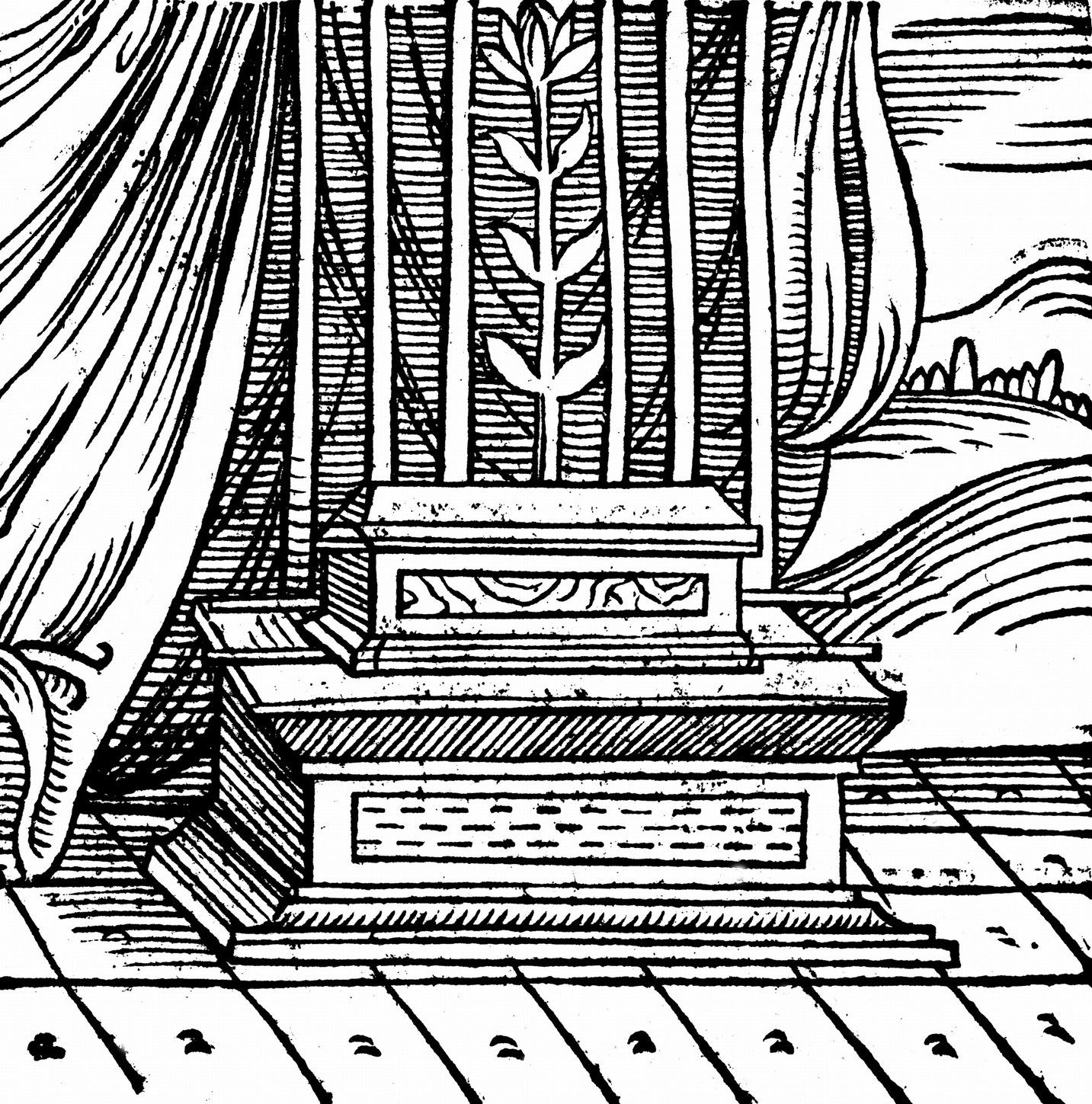
Both covenants required a sanctuary for the priest(s) to minister. The Old Covenant priests ministered in the earthly tabernacle (9:11-12) by offering sacrifices. The earthly tabernacle was very elaborate with furnishings made of gold like the lamp stand, table of shewbread, altar of incense, and the ark of the covenant (9:2-5), that the author could not elaborate on every detail (9:5).
They offered bloody sacrifices of bulls and goats (10:4). These sacrifices could only atone for the errors of the people (9:7), or as Numbers 15 repeatedly identifies, sins committed in ignorance. And they were only good for outward ceremonial purification (9:10) like the use of the ashes of the heifer which could only cleanse the flesh (9:13) and the blood of bulls and goats could only purify the temple (9:23). The efficacy was no more for that which was ceremonial and outward. As FF Bruce said, “The blood of slaughtered animals under the old order did possess a certain efficacy, but it was an outward efficacy for the removal of ceremonial pollution.”6 But these sacrifices were inwardly insufficient - the blood of bulls and goats cannot take away sin (10:4) nor cleanse the conscience (9:14). Why?
This is because God designed these sacrifices to be inadequate because they only foreshadowed the sacrifice of Christ. They were never meant to be the means of atonement (9:9-10). But the sacrifice of the New Covenant cleanses all kinds of sin (9:11). Christ was a high priest of good things to come. While the blood of animals could only purify outwardly (9:13), Christ’s blood could purge the conscience of sin (9:14). This is why by his blood can obtain an eternal redemption for his people (9:12).
Furthermore, the temple on earth was only a copy and shadow (8:5). Jesus could not have served there (8:4). Rather, he came to serve in the true tabernacle, which is heaven - a tabernacle not made by human hands (9:11). Christ entered the real temple with his blood and appeared before God to appease him (9:24). And because the workplace was better, the work was also better (8:2).
The Change in Covenants
Why was there a change in these institutions? Why did God institute the New Covenant? This was because God found fault with the Old Covenant (8:7-8). It was weak (7:18). The ceremonial laws made no one perfect (7:19). They had to be continually offered (10:2). They were only shadows (10:1). The priesthood was not perfect (7:11). And the annual sacrifice by the High Priest at the Day of Atonement was a continual reminder that the worshiper was not cleansed (10:3). The people of the Old Covenant were also disobedient (8:9) despite him redeeming them from Egypt. They could not draw near. Furthermore, they did not want to draw near because it was foreboding (12:18-21).
So God would make a New Covenant (8:8,10) with a change in the priesthood (7:12). Through this covenant, God would reveal himself completely to the people and would cleanse them in their heart and put his laws therein (8:10), making them perfect so they can draw near to him (7:19). It promised an exclusive and loving relationship with God (8:6,10), where he would forgive their sins and be merciful to them (8:12). Those who are God’s people will know him (8:11). They will have an internal religion - not an outward one (8:10). This results in service to the living God (9:14). And Christ will come again for the people he has sanctified (9:28).
But this New Covenant was not entirely new. It was planned from the beginning - it was an everlasting covenant (13:20). This type of covenant was a testament, which mean that for the benefits to accrue to the beneficiaries, the benefactor (Christ) had to die (9:22). So God had to prepare Christ’s body for sacrifice and Christ willingly obeyed God’s will (10:5-7). This means that the faultiness of the Old Covenant, its weakness, the New Covenant, and Christ’s death were all planned by God from the eternity past.
And what it means, too, is that those in the Old Covenant, who were called, could have their sins and conscience purged not by the system of the Old Covenant, but by the New (9:15). Because of Christ’s inauguration of the New Covenant, he has abolished the Old Covenant (10:9). It is no longer effective because it is now obsolete (8:13).
The Danger of Unbelief and the Need for Faith and Obedience in Keeping Near to God Through Fellowship and Corporate Worship
God brought his people into covenant with him to obey him faithfully because he had delivered them. This is why unbelief and disobedience result in severe judgment from God in both covenants. In the Old Covenant, after God had redeemed them and given them his revelation on how they should worship him, the people failed to do so.
Unbelief and Judgment in the Old Covenant
This was especially so in Numbers 13-14 when they refused to enter the Promised Land because they failed to believe that God would give them the land. They hardened their hearts (3:8), challenged God (3:9), went astray in their hearts (3:10), disbelieved (3:12), and rebelled (3:16). And it was because of this sinful unbelief that God disallowed them from entering it (3:11,17-19). This is despite the fact that they had seen them seeing the miracles and heard the word by angels; their sin and disbelief led to judgment (2:2).
Those that came out of Egypt were a mixed multitude (Exodus 12:38, Leviticus 24:10). Not all joined themselves to Israel’s God by faith. This is no different to the New Covenant community. The author exhorted his readers not to harden their hearts (3:8). They were called holy brethren (3:1) in the sense that the unbelieving spouse and children of a believer is set apart (1 Corinthians 7:14). These identified with the covenant community but had not joined themselves with God through faith. Only those who hold firmly to their faith belong to Christ (3:6). In other words, in the Old Covenant, there were those who were among the redeemed from Egypt, but Egypt but did not truly believe. And there are those who identify as Christians, who also do not truly believe (4:2).
Unbelief and Judgment in the New Covenant
There were those who had already rejected Jesus. They did not have genuine faith. Hebrews 6:4-5 speaks of them being enlightened, but does not say they believed. They tasted, but did not eat. They partook in spiritual things but did not possess the Spirit. They tasted the good word, but did not believe it. They even tasted the powers of the world to come and saw miraclesmiracles, but they did not believe. Because of their unbelief, they are called enemies (10:27), as they have trampled on Christ and insulted the Spirit (10:29). For such a person, there was no more hope of salvation (10:26) because they are willfully rejecting and disbelieving Christ (6:4-6), who is the only way of salvation. What awaits them is a fiery judgment (6:7-8, 10:27). Those who rebelled in the Old Covenant died without mercy (10:28). But those who reject Christ under the New Covenant have a worse judgment than those in the Old Covenant (2:3,10:29) because they fall spiritually into the hands of the living God (10:31), rather than the bodily penalties of the Old Covenant (12:20).
The Need to Encourage Faith and Obedience in the Covenant Community
What is the exhortation of the author? The author exhorts faith (3:1) and diligence in seeking salvation (4:11). Those who identify as believers in Jesus must seek out rest. Those that believe have rest (4:3). They have Sabbath rest now (4:4) and a future heavenly rest (4:7-9).
Those who identify as believers in Jesus must seek out rest. Those that believe have rest (4:3). They have Sabbath rest now (4:4) and a future heavenly rest (4:7-9).
How does the believer continue in faith? He is to take heed to the Word of God, believe it, and exercise themselves to obedience (2:1, 5:12-14). The Word of God will judge you right to the motives (4:12-13). Through the Word will one come to faith or know if he is not truly a believer. True faith is to take God at his Word and obey it, like Noah who obeyed, Abel who trusted in God’s way of atonement, and Enoch who walked with God (11:1-7).
Believers are also to press on in their faith (6:9) by loving Christ through their faithful service to one another (6:11-12). They are to delight in worship because they have been forgiven (10:22) and are exhorted to help other believers to do the same - not to leave Christ by meeting often and inciting them to loving service, obedience, and care (10:24-25,32-36, 12:12-13). Believers are not to fall back into Judaism which would bring much trouble to the church (6:1-3, 12:14-17) because the just shall live by faith (10:38-39).
The Way to Encourage Faith Is to Look at Examples of Endurance
One of the ways to draw near to God is to look at the examples of those who persevered in their faith. This means that faith in God was the required in both the Old and New Covenants. Abraham trusted God’s promises and obeyed God even when some of those promises were not fulfilled in his lifetime (11:8-9) and others were fulfilled because he waited (11:11), and yet he obeyed when his faith was tested (11:17-19). And the reason he was able to do this was because hise hope was in heaven (11:10,16). Other saints in the Old Covenant and New Covenant endured and trusted in God (11:20-31).
But the way to press on in drawing near to God is by looking at God himself. Christ was very patient with sinners (12:3) and he did not give up in his fight against sin (12:4). Toward his people, he is patient with their failures, chastening them because he loves them (12:5-8) so they might produce obedience (12:11).
Responsibilities Under the New Covenant
The Christian Is Part of the New Covenant Assembly
The Christian does not belong to the Old Covenant. The Old Covenant was a terrifying covenant. The people were terrified at the giving of the covenant at Sinai (12:18-19). It was so threatening in its cosmic and legal conditions that the people asked Moses to represent them and he too, was afraid (12:20-21). While both covenants had mediators, the Old Covenant’s was afraid while the New Covenant’s was more worthy than Moses (3:3) and was faithful as a son who would have had no fear (2:5-6).
But the Christian belongs to the New Covenant - not Sinai, but Zion (12:22). While the living God and innumerable angels were at both Sinai and Zion, Zion appears to be more welcoming. At Sinai, the angels numbered in the thousands and were on chariots. They were fighting angels (Psalm 68). But Zion was a joyous community because the believers had ascended that mount and their names were written in heaven (12:23). It is also a holy community because God the judge had made their spirits perfect by Christ’s sacrifice as mediator of the New Covenant, which was better than Abel’s animal sacrifice (12:23-24).
The Duty to Fear God and Serve Him
The God that is worshiped in the Old and New Covenants is the same. In the New, he is a consuming fire (12:29). In the Old, he is also a consuming fire (Deuteronomy 4:24). Therefore, the Christian has the duty to fear God. We are not to resist God (12:25). He who shook the earth at Sinai will one day shake the earth and heaven (12:26-27, 2 Peter 3:10). Everything will be burned up except for this kingdom (12:28). Therefore, the believer is exhorted to be grateful and to worship God acceptably with reverence and godly fear (12:29).
There are also requirements to serve God. In the Old Covenant there were commandments given concerning vertical and horizontal responsibilities in the covenant document. In the New there are also vertical and horizontal responsibilities. The believer serves God through his obedience in these areas: in loving the brethren (13:1-3,18-19), in keeping marriage and sex pure (13:4), in being content (13:5-6), in obeying the officers of the church (13:7,17), in maintaining right beliefs and right New Covenant living (13:8-13), and in continual worship and obedience (13:15).
And believers can persevere in these things because God himself will draw near to them who draw near to him by equipping them to live the Christian life by perfecting them and guiding them through Christ (13:20-21).
The Physical and Metaphysical in Worship
As Seen in the Institutions of the Two Covenants
The Old Covenant institutions of worship are essentially physical. Mount Sinai on which the covenant was made was a physical mountain. It was cordoned offoff, and no one could approach it until they were sanctified by blood. The emanations off the mountain could be sensed such as the burning fire, the darkness, the blackness, the sound of a trumpet, the voice of God speaking. The tabernacle was also physical, its furnishings constructed by wood and gold, its smoke could be smelled. The priests were adorned with linen clothing. The animals could be touched and slaughtered and their blood poured out. This worship could be seen, heard, felt, and smelt.
But these physical institutions were shadows of a metaphysical reality. In heaven there is the throne of God surrounded by angels. Isaiah’s vision described the smoke that surrounded the throne and the angel holding a live coal which he took off the altar with tongs. These are reflected by the ark of the covenant. Other allusions may be made of the other temple furnishings. Even the works of the priests were physical symbols and shadows of a better metaphysical fulfillment. And while they could not atone for sins to bring anyone into the presence of God, Christ’s single work of atonement cut through the heavenly veil, gaining access to all who come to God through him.
On the other hand, the New Covenant institutions of worship are essentially metaphysical. While Christ did die and rise physically and enter heaven with his body; yet the work he does there by interceding for his people is not physical. The true temple in heaven is not physical, even the seat of God is mere figurative for God is a Spirit. However, when the New Covenant believer worships, he is a participant of heavenly worship having come to the assembly of Christ and to the spirits of those who are saved. Christians do not worship physically in heaven, but they are positionally there. In the same way, Christ is not present in body with his people, but when the gathered church comes together in praise, Jesus worships together with them. And so because of Jesus’ mediatorial work, believers can draw near to God and approach him spiritually and not physically.
As Seen in the Chapter on Faith
In order to institute the New Covenant and to provide an atonement, God had to prepare a body (10:5) for Christ, who then was incarnated and made a little lower than the angels (2:9) so that he could be made like those he would represent (2:14,17). And when he died, he could thereafter bring many sons to glory (2:10). This is why, the believer who is yet on earth physically, is able to draw near to God, having boldness to enter into the holiest by the blood of Jesus, by a new and living way, which he hath consecrated for us, through the veil, that is to say, his flesh (10:19-20).
Principles of Acceptable Worship for New Covenant Believers
From the above theological ideas on worship from the Book of Hebrews, the following would be the principles of acceptable worship for New Covenant believers:
- They worship God with the help of a mediator - who is their Great High Priest, the Lord Jesus Christ.
- They are to draw near to God boldly because a perfect atonement has been made for them by the offering of the Lord Jesus Christ, whose blood has forgiven them of all sin - ceremonial uncleanness, sins of ignorance, and high-handed sins.
- They do not worship in a physical temple nor offer animal sacrifices because the Old Covenant institution has been abrogated and made obsolete.
- They draw near in worship by the sacrifice of their lips and by prayers.
- When they worship they are to fear God because they are in his very powerful and awesome presence.
- When they sing, Christ sings with them.
- They are to live lives of obedience to Christ’s commandments and persevere in their faith.
- They are to encourage others by the Word to live obediently and by faith.
Conclusion
The Book of Hebrews compares and contrasts the worship systems of the Old and New Covenants. The purpose was to show the superiority of the New Covenant - its message, its mediator, and its results. While the Old Covenant could not expiate sin or propitiate the wrath of God toward sinners, these New Covenant’s benefits of salvation and access to God flow to all who are recipients through faith of Christ’s redemption and atonement. And while the two covenants have many similarities, many of the Old Covenant institutions were fulfilled in Christ. Now, when believers worship, they worship in the presence of God, fulling duties required of them and worshiping God acceptably under the New Covenant.
Notes
- David L. Allen, Hebrews, The New American Commentary (Nashville, TN: B & H Publishing Group, 2010), 79. ↩
- Kiwoong Son, Zion Symbolism in Hebrews: Hebrews 12:18-24 as a Hermeneutical Key to the Epistle (Milton Keynes: Paternoster, 2005), 200.
- William L. Lane, Hebrews 1–8, vol. 47A, Word Biblical Commentary (Dallas: Word, Incorporated, 1991), 11. ↩
- William L. Lane, Hebrews 1–8, 116. ↩
- F. F. Bruce, The Epistle to the Hebrews, Rev. ed., The New International Commentary on the New Testament (Grand Rapids, MI: Wm. B. Eerdmans Publishing Co., 1990), 89. ↩
- F. F. Bruce, The Epistle to the Hebrews, 214. ↩